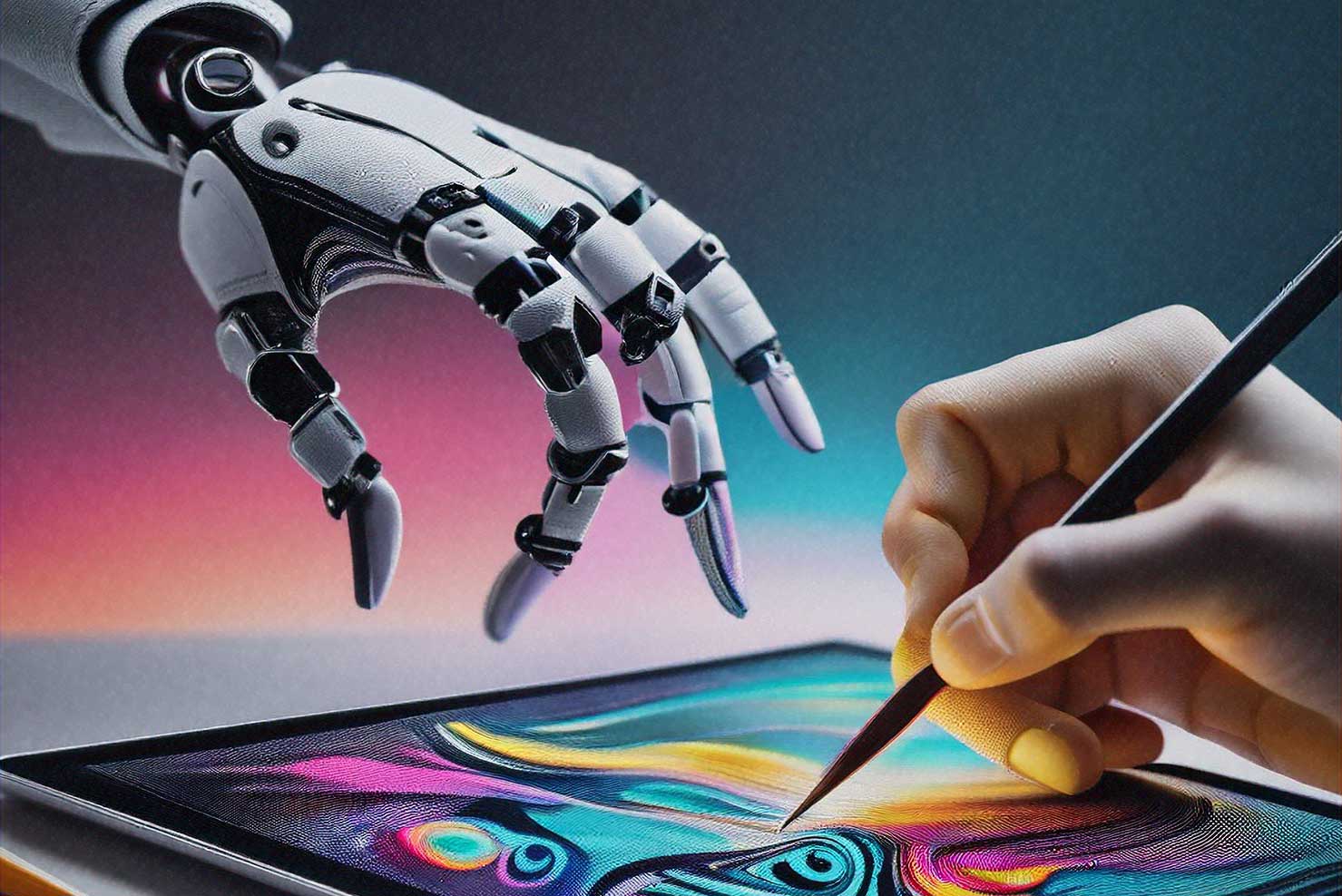
Synthetic intelligence has moved fast from specialized novelty to creative collaborator. AI now makes paintings, music, poetry, and film imagery that many people describe as “psychological.” This raises a fundamental concern: is AI expressing emotion, or basically simulating it? The distinction issues because emotion has prolonged been considered central to meaningful artwork, shaping how we benefit authorship, authenticity, and creative intent. Let's remedy these questions with me, Gustav Woltmann.
How People Ordinarily Define Emotional Art
For the majority of of history, emotional art has actually been recognized as being a direct extension of human internal everyday living. Artwork was not simply a product being eaten, but a form of communication—an try to externalize thoughts that would not be fully expressed via common language. Irrespective of whether through cave paintings, religious icons, symphonies, or novels, emotional art is valued for its perceived link to lived practical experience.
At the middle of the definition is intention. Audiences have very long assumed that at the rear of a moving artwork lies a conscious mind that felt some thing very first. Grief expressed by way of a requiem, longing embedded within a enjoy poem, or rage conveyed by way of protest artwork is comprehended as genuine since it originates from personalized emotion. Even if the artist’s biography is unfamiliar, viewers have a tendency to imagine an emotional presence guiding the work.
Struggling and wrestle have also performed a major position in how emotional art is framed. Many cultural narratives link artistic depth to hardship, reinforcing the concept highly effective artwork have to be “attained” via encounter. This belief has elevated is effective established in periods of war, exile, disease, or oppression, suggesting that emotion gains legitimacy by means of discomfort. Whilst not universally true, this Affiliation has shaped how audiences interpret sincerity and depth.
An additional defining feature is vulnerability. Psychological art frequently exposes something non-public—dread, want, question, or hope—building the artist emotionally noticeable to the viewers. This perceived openness generates believe in. Viewers experience These are encountering not only an item, but a fragment of another human being’s internal world. The psychological bond formed is relational in lieu of specialized.
Importantly, traditional definitions of psychological art will not need common knowing. Emotion in artwork has often been subjective and culturally formed. What moves one particular audience may possibly leave One more untouched. However the belief remains that psychological meaning is anchored in human consciousness, whether or not interpretation varies.
In this particular framework, emotion in artwork is inseparable from humanity itself. It is actually rooted in memory, embodiment, and mortality—characteristics that equipment don't have. This is why the emergence of AI-produced artwork feels disruptive. It challenges a hundreds of years-aged belief that emotional expression is uniquely human, forcing a reconsideration of irrespective of whether emotion in art is outlined by its origin or by its impact on those that knowledge it.
How AI Produces Art
Artificial intelligence makes artwork by means of procedures essentially different from human creativeness. In lieu of drawing from personal expertise, emotion, or intention, AI devices work via pattern recognition, statistical modeling, and prediction. Knowledge this difference is essential to evaluating no matter whether AI-produced artwork is usually regarded as emotional in any standard feeling.
Most Artistic AI systems are educated on large datasets of human-manufactured get the job done—paintings, new music, literature, photos, or movies. During coaching, the model identifies recurring structures: how specific colour mixtures convey mood, how rhythm influences emotional tone, or how word option signals sadness, joy, or tension. The system does not comprehend these components conceptually; it learns correlations in between inputs and outputs.
When prompted to make art, AI does not “decide” what to express. Instead, it calculates which combos of features are statistically most certainly to fulfill the ask for. A melancholic painting, for instance, emerges not from sadness but from acquired associations concerning Visible cues along with the label “melancholy.” The method is closer to stylish mimicry than self-expression.
Importantly, AI has no consciousness of that means. It can not reflect on its output, experience attachment to it, or choose no matter whether it succeeded emotionally. Evaluation happens externally, by human opinions, rankings, or reinforcement techniques that optimize upcoming outputs. What enhances just isn't understanding, but alignment with human desire.
Human involvement stays central at each phase. Folks choose the teaching info, define aesthetic aims, compose prompts, and choose which outputs are value sharing. In many conditions, the emotional coherence of AI artwork is dependent heavily about the clarity and sensitivity of human path. The equipment functions being an amplifier as opposed to an originator.
This method problems intuitive Thoughts about creativeness. AI artwork just isn't spontaneous or expressive in the human feeling, yet it may be shockingly powerful at reproducing psychological type. It demonstrates that A great deal of what people figure out as emotional expression follows discernible designs that can be replicated without having emotion.
In the end, AI makes artwork by modeling how emotional expression appears to be like, sounds, or reads—not by going through emotion alone. The result is art that will feel emotional to audiences, even though remaining solely mechanical in its creation, increasing complicated questions about regardless of whether emotion in artwork is described by procedure, intention, or perception.
Psychological Impression vs. Psychological Intent
A central tension in debates about AI-produced art lies from the distinction between emotional intent and emotional effect. Ordinarily, both of these principles happen to be closely connected. Human artists come to feel a little something, deliberately express it, and audiences respond emotionally. AI disrupts this sequence by getting rid of intent even though generally preserving effects.
Psychological intent refers back to the creator’s internal state and objective. Whenever a human artist produces, emotion guides alternatives—what to incorporate, what to go away ambiguous, and when to prevent. Intent indicates agency and this means: the perception which the artwork is often a deliberate act of interaction from a person intellect to a different. This perception strongly styles how audiences price artwork, typically deepening emotional engagement when intent is assumed.
Emotional effect, by contrast, exists completely within the viewer or listener. It is the disappointment, awe, consolation, or unease an artwork provides, despite how or why it absolutely was designed. Importantly, impression isn't going to call for understanding of the creator’s emotions. Individuals are routinely moved by anonymous is effective, historic artifacts, or normal phenomena that carry no conscious intent at all. A stormy seascape, a ruined building, or a fraction of audio can evoke robust emotion with out an identifiable psychological resource.
AI-produced art occupies this hole. Even though it lacks emotional intent, it can however make emotional impact by replicating official factors recognized to result in human responses. Viewers may well come to feel moved prior to knowing—or maybe caring—that a device produced the get the job done. In some instances, the psychological response occurs initially, with queries of authorship arising only afterward.
This raises an not comfortable concern: if emotion is genuinely felt because of the audience, does the absence of intent invalidate the working experience? For a few, knowing that no person felt something at the rear of the perform diminishes its this means, breaking the feeling of relationship. For Other individuals, the psychological response by itself is sufficient, irrespective of origin.
The excellence matters mainly because it shifts exactly where emotion in artwork is located. If emotion needs intent, then AI can only imitate psychological art. If emotion resides while in the experience on the viewers, then AI gets to be a legit emotional actor, In spite of its not enough feeling. The unresolved stress concerning these views displays broader uncertainty about Gustav Woltmann artist no matter if art is defined by development, reception, or the connection between the two.
The Position of Human Impact
Despite the developing autonomy attributed to synthetic intelligence, AI-created artwork remains deeply shaped by human affect. Significantly from functioning in isolation, creative AI techniques are embedded within just levels of human decision-creating that information, constrain, and in the long run give intending to their output. Understanding this influence is crucial to evaluating statements about psychological authenticity.
Human involvement starts with facts range. AI models are educated on collections of human-developed art that previously incorporate psychological language, cultural symbols, and aesthetic values. The psychological traits existing in AI-produced get the job done are inherited, not invented. They replicate generations of inventive Conference, filtered by modern-day preferences and biases embedded from the datasets.
Prompting even further directs psychological tone. When people check with an AI to build a thing “nostalgic,” “tender,” or “disturbing,” they offer psychological framing that designs the result. The more specific and emotionally literate the prompt, the greater coherent the output has a tendency to be. With this feeling, people act as psychological translators, changing subjective experience into Guidelines a machine can adhere to.
Curation is equally vital. AI makes quite a few outputs, but human beings decide which ones make any difference. Range, modifying, and presentation all form how the function is perceived. A discarded graphic may very well be emotionally flat, when a chosen 1 seems strong—not since the machine enhanced, but since a human recognized resonance.
Even interpretation is guided by human context. Audiences convey their unique Recollections, expectations, and cultural frameworks to AI artwork, usually projecting meaning wherever none was meant. Knowledge that a chunk was generated by AI can possibly diminish or intensify emotional reaction, dependant upon individual beliefs about creative imagination and authenticity.
Seen this way, AI is a lot less an impartial artist and more a reflective floor. It rearranges emotional indicators already positioned into it by human culture and highlights designs humans respond to. The psychological electrical power attributed to AI artwork is as a result not proof of machine emotion, but of human influence running at each phase—from generation to perception.
Rather then replacing human emotion in artwork, AI concentrates it, redistributes it, and reframes it. The machine’s part is technological, nevertheless the psychological substance stays unmistakably human.
What AI Variations About Art
Synthetic intelligence does not just increase a brand new Resource to the creative course of action; it alters how art is understood, valued, and judged. By separating psychological outcome from emotional knowledge, AI worries assumptions that have shaped creative lifestyle for hundreds of years. The result is not the disappearance of human creativeness, but a redefinition of its boundaries.
A person major shift would be the decentering of your artist’s inner existence. Regular artwork criticism often prioritizes biography, intention, and personal struggle. AI-produced artwork weakens this framework by manufacturing do the job with no lived narrative driving it. Therefore, audiences are compelled to confront the do the job alone instead of the story of its maker. Which means gets to be much less about who designed the artwork and more details on how it is acquired.
AI also exposes the amount psychological expression depends on framework. If a device can reproduce moods by styles of shade, rhythm, or language, then emotion in artwork is just not purely spontaneous or mysterious. This doesn't cheapen emotion, but it surely reveals that psychological conversation is, partly, a realized program—one particular which can be modeled, repeated, and scaled.
Yet another modify lies in accessibility. AI lowers specialized barriers, allowing people without official teaching to make polished Innovative operate. This democratization shifts creative value clear of execution and towards principle, curation, and intent. The emotional significance of artwork ever more is dependent upon why one thing was produced and how it is actually framed, as an alternative to how challenging it was to generate.
AI also complicates authorship. When Artistic output emerges from collaboration amongst human prompts, machine technology, and algorithmic constraints, ownership becomes diffuse. This blurring worries authorized, ethical, and cultural norms bordering originality and emotional authenticity.
Finally, AI reframes art as a shared psychological Area rather than a solitary act of expression. It pushes emotion out with the creator on your own and into the connection amongst method, viewers, and context. In doing so, AI won't eradicate psychological art—it forces a far more truthful assessment of the place emotion in art actually resides and why it matters.
Comments on “Can Artificial Intelligence Certainly Make “Emotional” Artwork? By Gustav Woltmann”